
- Bithumb
- Operational Risk
- Crypto Exchange
- Bitcoin
- Financial Institutions
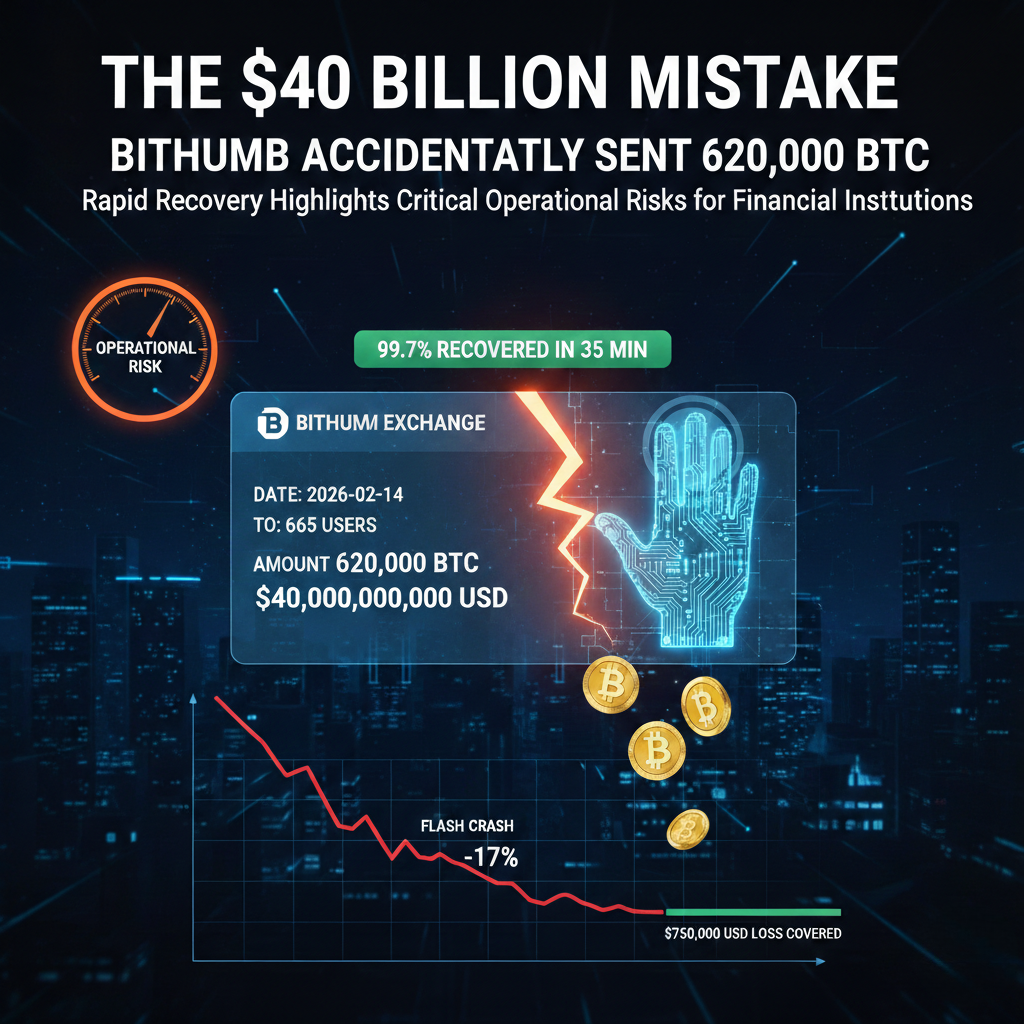
TL;DR – Bithumb accidentally distributed $40 billion in Bitcoin to users during a promotional event, triggering a flash crash before recovering 99.7% within 35 minutes. The incident highlights critical operational risks that financial institutions must consider when selecting crypto service providers.
The $40 Billion Mistake
On Friday, South Korean cryptocurrency exchange Bithumb made what may be the costliest operational error in crypto history. During a routine promotional event intended to distribute approximately $1.37 in Bitcoin to 695 users, the exchange accidentally sent 620,000 BTC, valued at over $40 billion.
Each user received roughly 2,000 BTC instead of the intended promotional amount. Within minutes, some recipients began selling their unexpected windfall, triggering a 17% flash crash on the platform. Bitcoin's price briefly plummeted to 81.1 million won on Bithumb before the exchange froze trading and withdrawals.
To their credit, Bithumb contained the situation within 35 minutes and has since recovered 99.7% of the misallocated Bitcoin. The exchange pledged to cover the remaining shortfall from its own reserves, compensate affected users with a 10% bonus, and offset unfavorable trade prices. Total estimated losses were approximately 1 billion won ($750,000).
Operational Risk Takes Center Stage
While the crypto industry has made significant strides in preventing external threats such as hacks and exploits, Bithumb's error highlights a different category of risk: internal operational controls. The fact that a promotional distribution system could accidentally send billions of dollars in Bitcoin points to fundamental gaps in safeguards.
This incident comes at a time when Bitcoin's price volatility has already created challenges for institutional adoption, making operational stability even more critical for financial institutions evaluating crypto services.
"Multi-signature approvals, transaction limits, and automated validation checks are table stakes for any regulated financial institution," notes a recent BitGo compliance report. "The gap between consumer exchanges and institutional-grade solutions continues to widen."
Why Platform Selection Matters More Than Ever
For U.S. banks and credit unions, this headline represents exactly the kind of operational risk that makes boards and compliance teams nervous. However, the incident shouldn't be viewed as a reflection on Bitcoin itself; the blockchain performed as expected. This was a centralized platform failure with inadequate controls.
The distinction between overseas consumer exchanges and U.S. regulated, institutional-grade custody solutions is enormous. Providers operating under U.S. regulatory frameworks offer SOC 2 compliance, multi-signature custody, and segregated accounts safeguards that prevent incidents like Bithumb's error.
As recent analysis shows, institutional Bitcoin adoption continues despite market volatility, but operational excellence becomes the differentiating factor.
Institutional Response and Market Impact
The incident had minimal impact on global Bitcoin markets, with CoinGecko data showing BTC maintaining stability around $80,000 despite the Korean exchange's flash crash. This resilience demonstrates Bitcoin's maturity as an asset class, even when individual platforms experience operational failures.
According to The Block, Bithumb ranks among the top 20 global exchanges by volume, making this incident a significant test of crisis management protocols. The exchange's rapid response and full compensation commitment may actually strengthen confidence in its operations.
Lessons for Financial Institutions
For banks and credit unions exploring crypto offerings, Bithumb's mistake reinforces three critical considerations:
Due Diligence Is Everything: Operational controls, not just security measures, must be thoroughly vetted. The difference between a promotional distribution error and a $40 billion mistake comes down to process controls and validation systems.
Regulatory Framework Matters: U.S.-regulated providers operate under oversight that requires the exact safeguards that were missing in this incident. When evaluating crypto partners, regulatory compliance isn't just about legal protection it's about operational excellence.
Member Demand Continues: Despite operational risks across some platforms, consumer and institutional demand for Bitcoin services continues to grow. The question isn't whether to offer crypto services, but how to do so safely.
Recent developments in Bitcoin taxation compliance and institutional adoption show that properly implemented crypto services can meet regulatory standards while serving member demand.
Moving Forward Responsibly
Bithumb's $40 billion error serves as a stark reminder that operational excellence matters as much as security in crypto infrastructure. For financial institutions, the incident shouldn't justify standing still it should reinforce the importance of partner selection.
The competitive advantage will go to institutions that move decisively with the right partners in place. Don't let someone else's operational failure become your excuse to delay serving member demand for Bitcoin services.
More Articles About Bithumb
U.S. Government Moves $1 Billion in Seized Bitfinex Bitcoin: What It Means
The U.S. government moved 12,267 BTC ($1.01B) from a Bitfinex-hack seizure wallet on Oct 8, 2026. No sale is confirmed. What it means for BTC holders....
October 8, 2026
Samsung Wallet Is Adding USDC: What It Means for Stablecoin Holders and Bitcoin Borrowers
Samsung Wallet adds USDC for 82M U.S. Galaxy devices in late October 2026, held by Bastion and Coinbase. What it means for stablecoin holders and BTC ...
October 8, 2026
The State of Bitcoin-Backed Lending, Q3 2026: A Smaller Market With Better Habits
Crypto lending shrank to $56.16B in Q2 with no blowups. How Coinbase, Arch, Strike, Ledn and Unchained compare on rate, LTV, custody and transparency....
October 7, 2026
Podcast Conversations About Bithumb


