

- MicroStrategy
- Bitcoin
- Corporate Strategy
- Financial Instruments
- Investment
TL;DR - Strategy bought 17,994 bitcoin last week for $1.28 billion, pushing its total stack to 738,731 BTC - 3.7% of all bitcoin that will ever exist. The real story isn't the accumulation. It's the four-instrument preferred stock machine ($8.36B) that now exceeds its convertible debt and funds the purchases on autopilot.
The Number Keeps Getting Bigger
Between March 2 and March 8, Strategy (formerly MicroStrategy) picked up another 17,994 bitcoin for $1.28 billion. That brought the total stack to 738,731 BTC - roughly 3.7% of every bitcoin that will ever exist, bought at an average cost of $75,862 per coin.
Michael Saylor called it the start of "the second century" - a reference to crossing $100 billion in bitcoin value at some point during the next leg up. That's the sales pitch. The structural story is more interesting.
Because the how matters more than the how much. Strategy doesn't just buy bitcoin with spare cash or equity raises anymore. It built a four-instrument preferred stock machine specifically designed to convert yield-seeking capital into bitcoin purchases. And in the last six months, that machine has become the company's primary funding engine.
The Preferred Stock Stack
Here's what most people miss about Strategy's capital structure. The company now has four separate preferred stock instruments, each designed for a different type of investor:
| Instrument | Type | Notional | Yield |
|---|---|---|---|
| STRK (Strike) | Convertible preferred | $1.4B | 8.0% fixed |
| STRC (Stretch) | Variable-rate preferred | $3.4B | 11.5% variable |
| STRD (Stride) | High-yield preferred | $1.4B | 10.0% fixed |
| STRF (Strife) | Senior preferred | $1.3B | TBD |
Total preferred equity: $8.36 billion. That now exceeds Strategy's $8.2 billion in convertible debt. The company's non-equity capital is split almost evenly between converts and preferreds, and the preferred side is growing faster.
Combined annual dividend obligations across all four instruments run about $876 million per year. That's real money going out the door to preferred holders while bitcoin sits on the balance sheet generating zero cash flow. The entire model depends on BTC appreciation outrunning the dividend bleed.
Why STRC Changed the Game
STRC is the instrument that made the machine self-sustaining. It's a variable-rate perpetual preferred stock designed to trade at or near its $100 par value. The dividend rate gets adjusted monthly - currently 11.5% annualized - to keep the trading price anchored.
What that creates is something that looks like a high-yield savings vehicle to income investors. You buy STRC at $100, you collect your monthly dividend, and the share price doesn't move much. It's not exciting. That's the point.
Strategy issues new STRC shares through at-the-market sales whenever the stock is trading near par. Each sale raises capital. That capital buys bitcoin. The bitcoin goes on the balance sheet. Rinse, repeat.
At Saylor's keynote at Strategy World 2026 in Las Vegas, he made the pivot explicit. STRC is now the "primary engine" for future bitcoin purchases. Benchmark analysts agreed, reiterating their buy rating on MSTR specifically because of the STRC funding mechanism's scalability.
The latest purchase proves the model works. Of the $1.28 billion Strategy spent on bitcoin the first week of March, $377 million came directly from STRC issuance. That's nearly a third of the purchase funded by a single preferred instrument that most retail investors have never heard of.
The Supply Math
At 738,731 BTC, Strategy controls more bitcoin than any entity except Satoshi's estimated 1.1 million coins. For context: all spot bitcoin ETFs combined hold roughly 1.1 million BTC. Strategy alone is two-thirds of the entire ETF market's holdings.
Here's where the supply picture gets uncomfortable. Bitcoin miners produce about 450 BTC per day - roughly 13,500 per month after the April 2024 halving. Strategy bought 17,994 BTC in a single week. It's buying at a pace that exceeds new mining supply by a factor of roughly 5x.
That level of concentrated accumulation doesn't show up in price immediately because most of it happens through OTC desks and block trades. But it tightens available float over time, and float compression is what drives supply shocks when demand picks up.
The Risk Nobody Wants to Talk About
There's an elegant version of this story where bitcoin goes to $150K, Strategy's balance sheet explodes in value, the preferred dividends get covered easily, and Saylor looks like the greatest capital allocator of his generation.
Then there's the other version. MSTR stock is already down 75% from its peak. The preferred instruments keep paying their dividends regardless of where bitcoin trades. If BTC sits at $65-70K for another year, Strategy is burning through $876 million annually in dividend payments against a stack that isn't appreciating. The convertible debt has its own maturity and conversion dynamics adding pressure.
The company's software business generates about $400 million in annual revenue. That doesn't come close to covering the preferred dividend obligations alone, let alone the convert interest. The entire structure is a leveraged bet that bitcoin goes up - funded by people who want yield, sold by a man who wants bitcoin.
It's aggressive. But it's legal, it's transparent, and so far it's worked. The Sharpe ratio on STRC actually looks decent for income investors willing to stomach the underlying BTC exposure.
What's Actually New
Strategy buying bitcoin isn't news. Strategy buying bitcoin through a custom-built, four-instrument preferred stock machine that now exceeds its convertible debt - that's structurally different from anything we've seen in public markets.
The pivot away from common stock issuance matters. When Strategy was funding purchases through MSTR equity sales, every buy diluted existing shareholders. The preferred stock route shifts the cost from dilution to dividends. Shareholders stop losing ownership percentage; instead, the company takes on a fixed annual cash obligation.
That trade-off only works if bitcoin keeps moving. And Saylor's entire career bet says it will. At 738,731 BTC, he's not hedging that thesis. He's doubling down with someone else's money - and the "someone else" is getting paid 8-11.5% to let him do it.
Sean Ristau | @SeanRistau | 21Rates / The Daily Stack
More Articles About MicroStrategy
Will the Fed Raise Rates in October? What It Means for Bitcoin Loans
The FOMC meets October 27-28, 2026, and as of October 23 a hold at 3.75% to 4.00% was widely expected, per CNBC. Whatever the decision, it does not mo...
October 25, 2026
Does Tesla Still Own Bitcoin? Holdings as of September 30, 2026
Yes, Tesla still owns bitcoin. As of September 30, 2026, Tesla held 11,509 BTC at an acquisition cost of $386 million, and SpaceX held 18,712 BTC with...
October 24, 2026
Visa Fireblocks Report: Fireblocks Denies Talks, Coinbase Denies Involvement
On October 22, 2026, CoinDesk reported that Axios, citing unidentified sources, said Visa was in late-stage talks to buy Fireblocks for $2.5 billion. ...
October 23, 2026
Podcast Conversations About MicroStrategy

Buying Bitcoin Isn’t Enough | The Bitcoin Advice Nobody Talks About
Buying Bitcoin may be the beginning — but it shouldn't be the end. This conversation challenges the ...

MSTR Reclaims $150? Bitcoin Maxis Are Wrong | Treasury Talks
MSTR Reclaims $150? MSTR is back in focus as Strategy (MicroStrategy) reclaims key levels and Bitcoi...
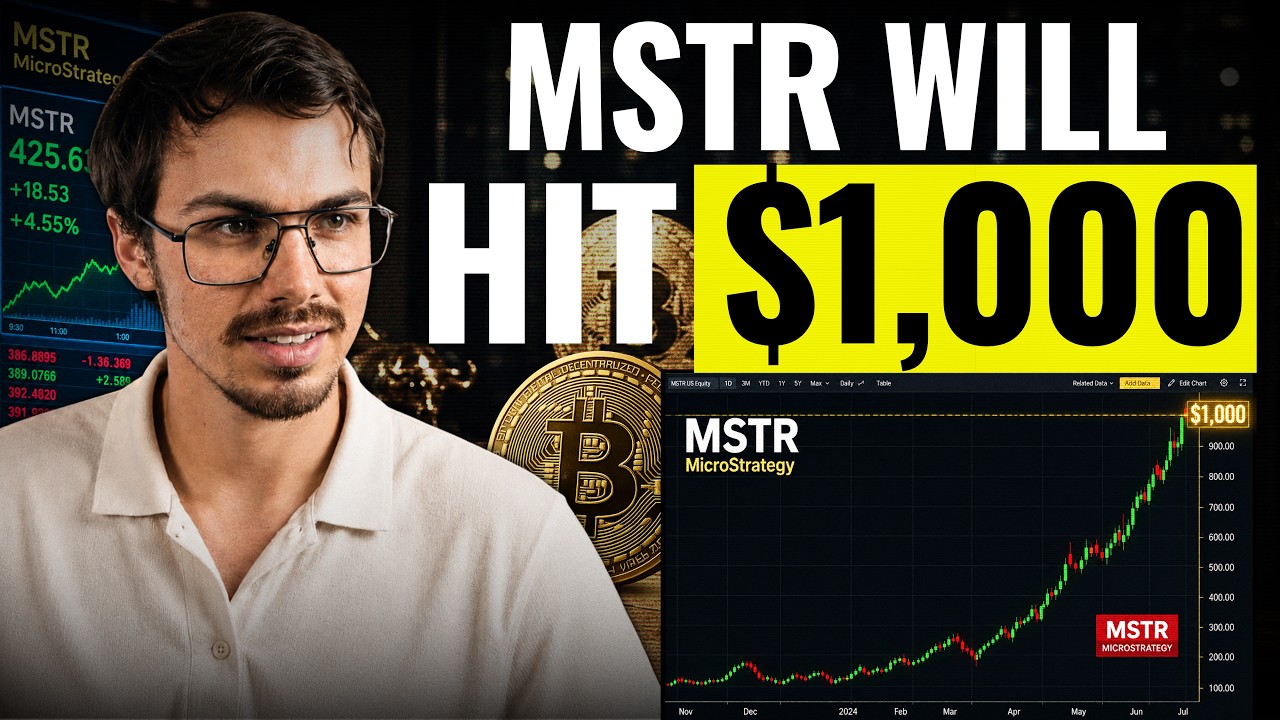
MSTR to $1,000: Why Strategy Could Keep Crushing Bitcoin
MSTR to $1,000? In this episode, Robin Schmidt explains why he believes Strategy (MSTR) could reach ...