
Beginner’s Guide to Multi-Institution Bitcoin Custody
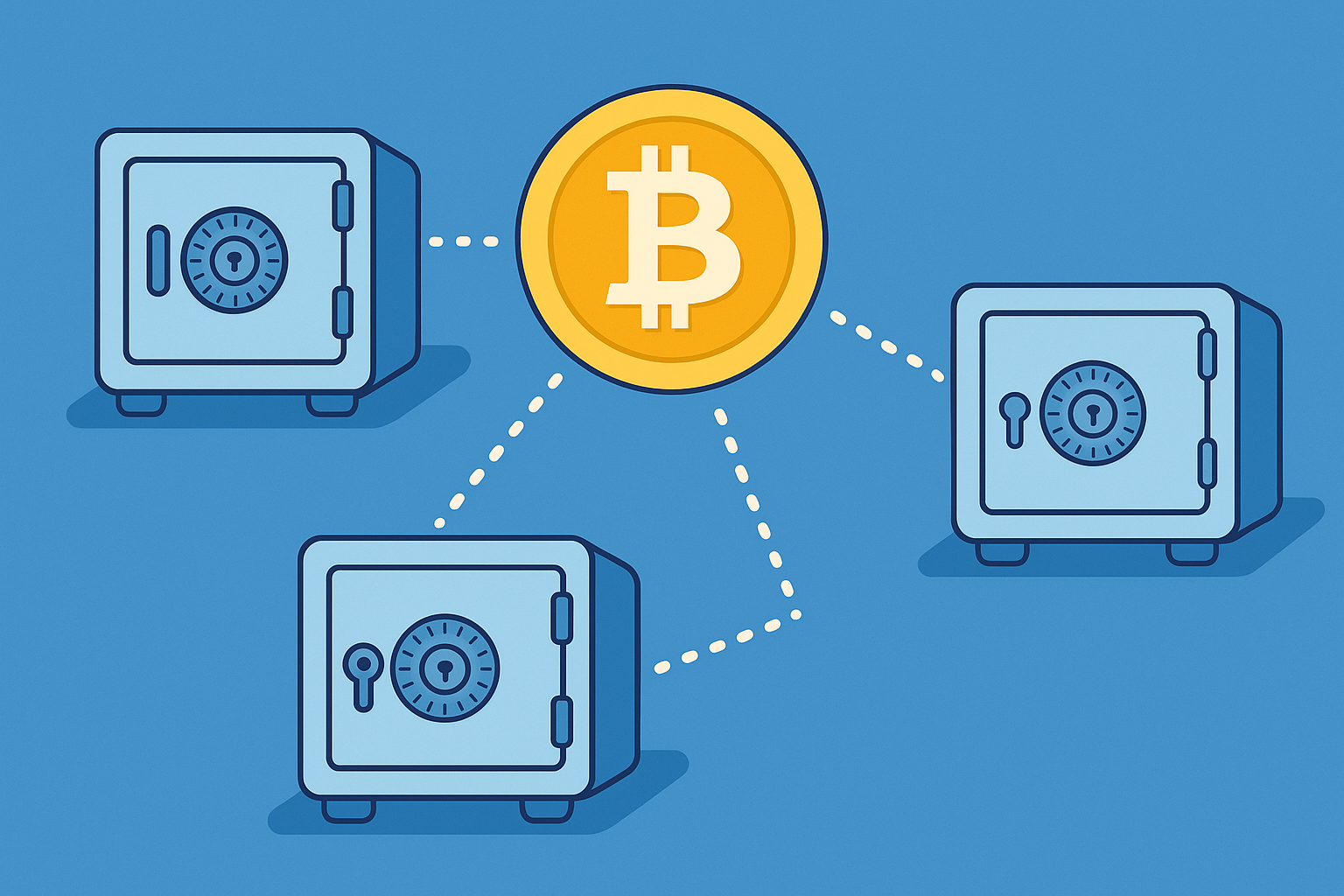
TL;DR – Multi-institution (a.k.a. collaborative) custody spreads your private keys across independent, regulated entities. It removes the single point of failure of a standard wallet while letting you remain the ultimate owner of your bitcoin.
1. Why Custody Matters—Especially for Beginners
If you hold bitcoin in a single-signature mobile wallet or leave it on an exchange, one lost device, one hack, or one bankruptcy can wipe you out. Multi-signature (multisig) wallets solve part of that problem by requiring multiple keys to spend coins, but managing all those keys yourself can feel overwhelming. Collaborative custody takes the concept further: multiple institutions each safeguard a minority key so that no single party—including you—can move funds alone. That way, even if one key is lost or compromised, the bitcoin stays safe. :contentReference[oaicite:0]{index=0}
2. How Multi-Institution Custody Works
Most providers deploy a 2-of-3 multisig quorum:
| Key Holder | Quorum Role | Typical Location |
|---|---|---|
| You | Majority key (1) | Your chosen hardware wallet or phone |
| Second Party (You or Trusted Person) | Majority key (2) | Separate hardware wallet, alternate location |
| Service Provider | Minority / recovery key (3) | Secure HSM or cold-storage facility |
Two of the three keys must sign a transaction. Because the keys live in separate places and are controlled by separate entities, theft, coercion, or technical failure at any one location cannot drain the funds. :contentReference[oaicite:1]{index=1}
3. Benefits at a Glance
- Eliminates single points of failure—an attacker must compromise at least two keys. :contentReference[oaicite:2]{index=2}
- Self-sovereignty with training wheels—you keep majority control but can lean on experts for recovery help.
- On-chain transparency—all signatures are visible, so you can audit custody easily. :contentReference[oaicite:3]{index=3}
- Inheritance-friendly—plans can specify which institutions co-sign with heirs.
- Regulatory compliance—institutions can be qualified custodians, meeting corporate or fund mandates. :contentReference[oaicite:4]{index=4}
4. Meet the Leading Providers
| Provider | Model Highlights | Best For |
|---|---|---|
| Unchained | Pioneered collaborative custody in 2018; enterprise network lets clients mix & match key agents. :contentReference[oaicite:5]{index=5} | Individuals, businesses, IRAs |
| Onramp | “Multi-Institution Custody (MIC)” with regulated key agents in different jurisdictions and Lloyd’s-insured coverage. :contentReference[oaicite:6]{index=6} | High-net-worth & family offices |
| Theya | Mobile-first vault; you hold two keys on devices you already own, Theya holds one recovery key. :contentReference[oaicite:7]{index=7} | Beginners and DIY upgraders |
Pro Tip: All three firms let you export the wallet configuration file and recover your bitcoin independently with open-source tools—essential for avoiding vendor lock-in.
5. Potential Drawbacks to Consider
- Some trust remains – you must vet providers’ operational security and solvency.
- Fees – annual custody or consultation fees can apply.
- Jurisdiction risk – laws or regulations affecting one institution could delay signing. Mitigate by choosing geographically diverse key agents.
- Slightly more setup – expect an onboarding call and KYC with most providers.
6. Getting Started in Three Simple Steps
- Assess your needs – amount of bitcoin, compliance requirements, inheritance plans.
- Book a consultation with at least two providers (e.g., Unchained and Onramp) to compare fees and service levels.
- Create your vault – generate keys on separate hardware wallets or secure mobile devices, complete a test spend, and store encrypted backups of your xpub and redeem-script.
7. Frequently Asked Questions
Is this only for large holders?
No. While institutions use these services for eight-figure treasuries, many providers offer starter plans for as little as 0.1 BTC.
Can I still trade quickly?
Yes. Providers integrate on-chain spend workflows and, in some cases, Lightning, but multisig inherently trades a bit of speed for security.
What happens if a provider goes out of business?
Because you control two keys (or can add a new key agent), you can move funds without the failed party’s signature.
8. Key Takeaways
Single-institution custody is risky; DIY multisig is complex. Multi-institution custody strikes a powerful middle ground: professionally managed resilience plus user-controlled autonomy. For beginners serious about long-term Bitcoin ownership, it’s one of the safest paths available today.
Written by the 21Rates Editorial Team, July 6 2025.


