- Bitcoin
- Halving
- Cryptocurrency
- Mining
- Investment
Bitcoin Halving: What It Means for Scarcity, Miners, and Your Portfolio
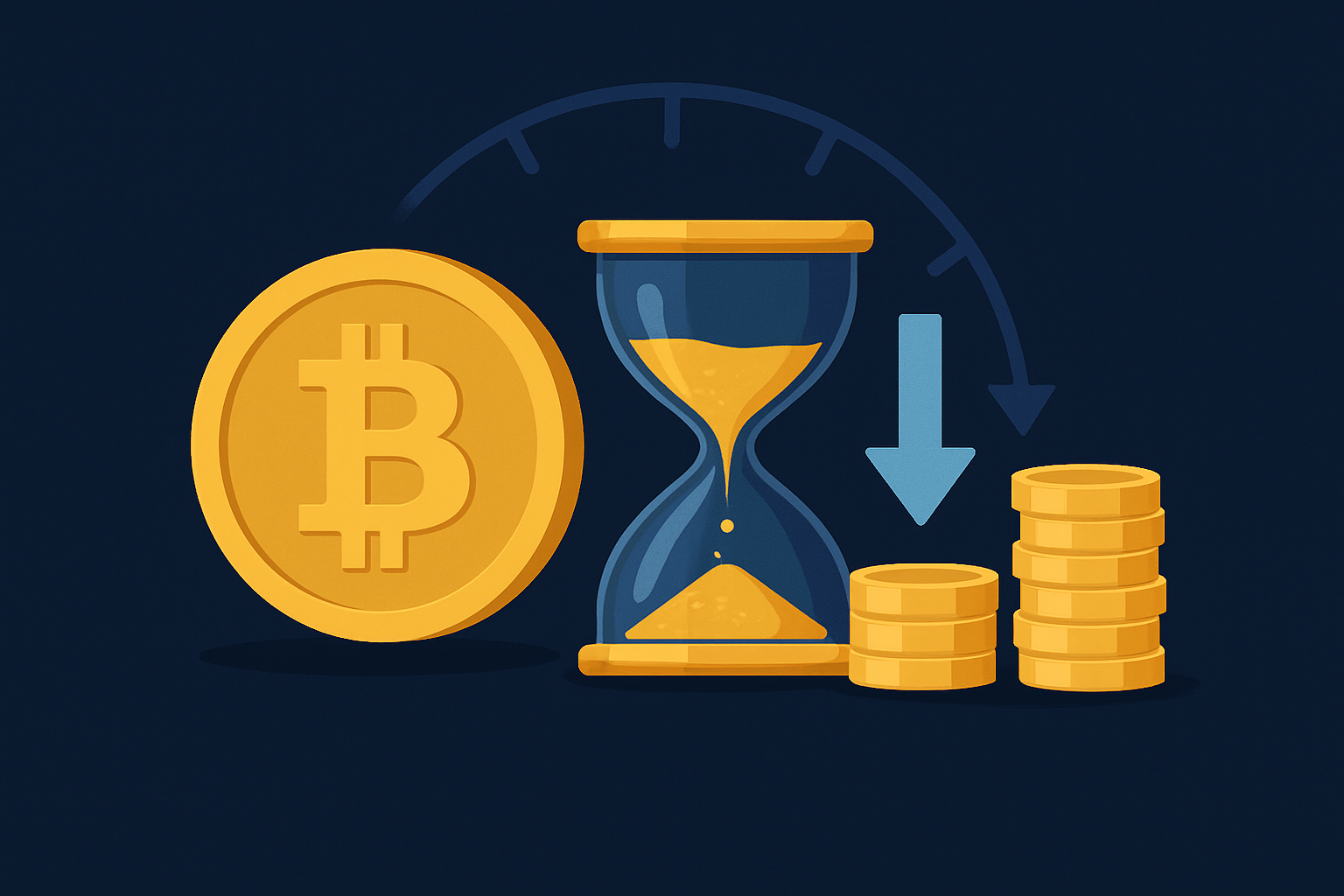
TL;DR – Bitcoin halves its new coin supply roughly every four years. This predictable cut in issuance reduces miner rewards, increases scarcity, and has historically triggered price surges. Understanding why it happens—and what it means for markets—can help you invest with confidence.
1. Why Does Bitcoin Halve?
In traditional finance, monetary policy lives in boardrooms. In Bitcoin, it lives in code. The halving is Bitcoin’s built-in monetary schedule:
- Every 210,000 blocks (~4 years), the reward miners receive for adding new blocks drops by 50%.
- This slows new supply and reinforces Bitcoin’s fixed cap of 21 million coins.
Why does this matter? Because no one—not a government, not a central bank—can change this rule without near-unanimous global consensus. The halving is Bitcoin’s answer to inflationary currency risk.
2. How New Bitcoin Is Created
Every block starts with a coinbase transaction:
- It has no inputs—it creates new BTC (the block subsidy).
- It also sweeps in all transaction fees.
- Miners decide where this payout goes.
When people say “miners create Bitcoin,” this is what they mean. And the halving cuts that creation rate in half.
3. The Schedule So Far
| Halving | Date | Reward Before | Reward After |
|---|---|---|---|
| 1st | 2012 | 50 BTC | 25 BTC |
| 2nd | 2016 | 25 BTC | 12.5 BTC |
| 3rd | 2020 | 12.5 BTC | 6.25 BTC |
| 4th | 2024 | 6.25 BTC | 3.125 BTC |
Today, miners earn 3.125 BTC per block—down from 50 in 2009. That means fewer new coins entering the market every day.
4. Scarcity and Stock-to-Flow
Halving events make Bitcoin progressively scarcer. After 2024:
- Annual inflation rate dropped below 0.8% (lower than gold’s ~1.7%).
- Stock-to-flow ratio (a measure of scarcity) jumped sharply.
Why does this matter? Because scarce, programmable assets behave differently than assets with elastic supply—especially when demand grows.
5. What Happens to Miners?
Miners keep Bitcoin secure by burning electricity in exchange for block rewards and fees. When the reward halves:
- Revenue falls instantly; less profitable rigs shut down.
- Hash rate dips; the network adjusts difficulty after ~2 weeks.
- Surviving miners—usually those with cheap power—capture a larger share.
Fees now cover ~20% of miner income thanks to rising block space demand (Ordinals, Lightning settlements). In the long run, fees must replace nearly all subsidy to keep miners incentivized.
6. Why Investors Care: The Halving Cycle
Historically, halvings have coincided with major bull runs:
| Cycle | Price at Halving | Peak 12–18 Months Later |
|---|---|---|
| 2012 | ~$12 | ~$1,100 |
| 2016 | ~$650 | ~$19,700 |
| 2020 | ~$9,000 | ~$69,000 |
Each cycle delivered smaller percentage gains, but absolute moves grew. Bitcoin is maturing—from speculative bet to macro-scale asset.
7. Common Questions
| Question | Answer |
|---|---|
| Is it priced in? | Probably not fully—behavioral cycles still matter. |
| Will miners survive long term? | Yes, if fee markets grow with network demand. |
| Is energy use sustainable? | Post-2024 data shows increased renewable adoption, not collapse. |
8. What’s Next?
| Halving | ETA | Reward | Inflation |
|---|---|---|---|
| 2028 | ~Mar–Apr | 1.5625 BTC | ~0.4% |
| 2032 | ~Q1 | 0.78125 BTC | ~0.2% |
By 2032, Bitcoin’s inflation will rival the lowest in financial history.
9. How to Position
- Plan early: Accumulate before the halving hype.
- Use DCA (Dollar-Cost Averaging): Smooth out volatility.
- Watch miner metrics: Hash rate and fees signal network health.
- Balance custody: Self-custody for sovereignty, ETFs or IRAs for tax strategy.
- Prepare for volatility: 30% drawdowns are still part of the game.
10. Bottom Line
The halving is not a gimmick. It is a code-enforced event that governs Bitcoin’s supply, miner incentives, and—indirectly—market psychology. For long-term investors, understanding this schedule is essential. It’s why Bitcoin remains the only asset on Wall Street with a monetary policy you can set your watch by.
Written by the 21Rates Editorial Team, July 27, 2025.
More Articles About Bitcoin
Minimum Loan Size for Major Bitcoin Lenders: 21Rates Data
Among the 21 Bitcoin lenders tracked by 21Rates (data as of Oct 23, 2026), minimum loan sizes run from $0 at Coinbase on the custodial side up to $500...
October 26, 2026
Will the Fed Raise Rates in October? What It Means for Bitcoin Loans
The FOMC meets October 27-28, 2026, and as of October 23 a hold at 3.75% to 4.00% was widely expected, per CNBC. Whatever the decision, it does not mo...
October 25, 2026
Does Tesla Still Own Bitcoin? Holdings as of September 30, 2026
Yes, Tesla still owns bitcoin. As of September 30, 2026, Tesla held 11,509 BTC at an acquisition cost of $386 million, and SpaceX held 18,712 BTC with...
October 24, 2026
Podcast Conversations About Bitcoin

Buying Bitcoin Isn’t Enough | The Bitcoin Advice Nobody Talks About
Buying Bitcoin may be the beginning — but it shouldn't be the end. This conversation challenges the ...

Bitcoin's Biggest Obstacle Isn't What You Think | Ophelia Snyder
In this episode of The Daily Stack, we sit down with Ophelia Snyder, co-founder of 21Shares, the com...

Bitcoin Is Changing — Self-Custody, Saylor & the New Bitcoin Era
Bitcoin is changing — and the biggest debate may not be about price. In this episode, we dive into t...