
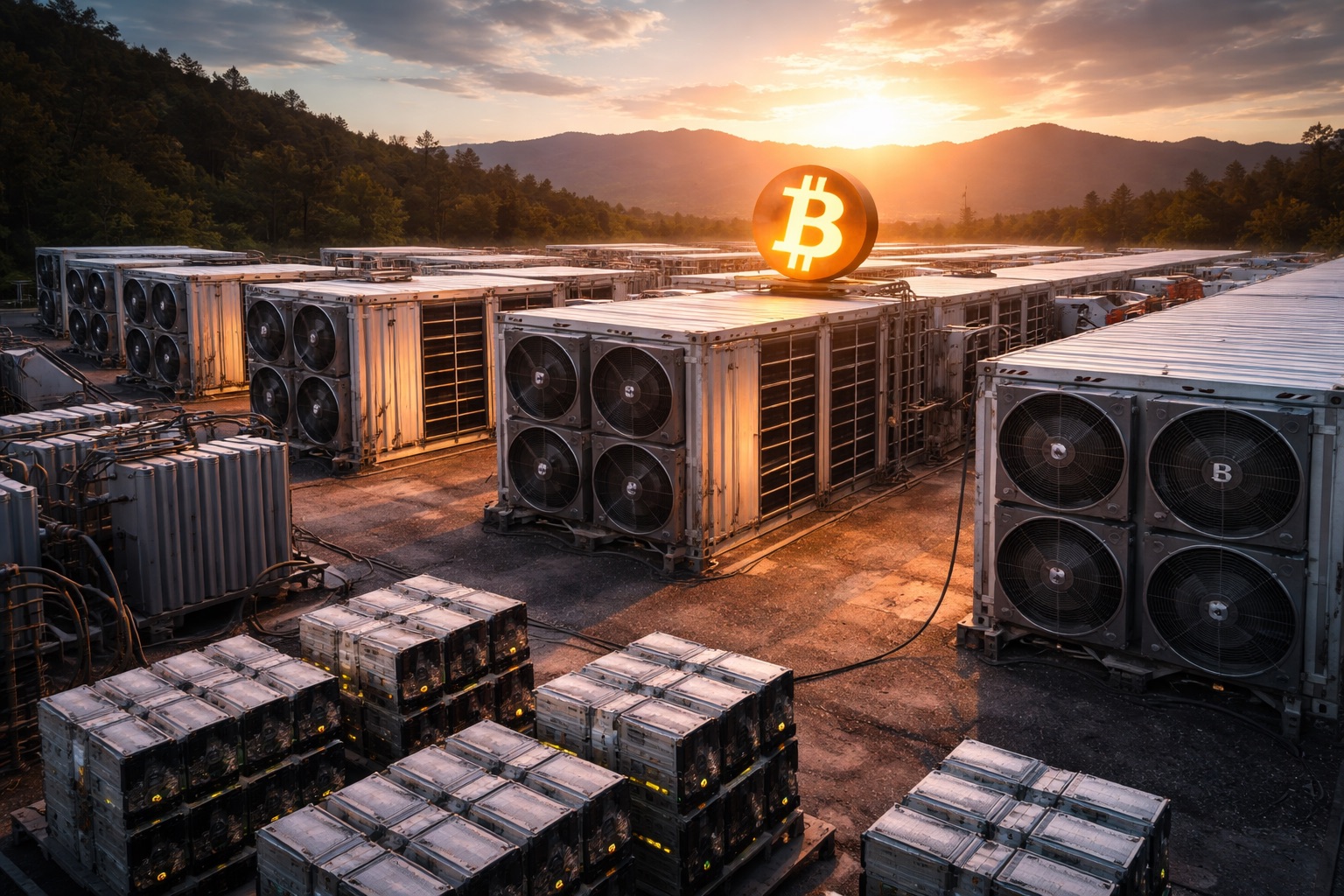
TL;DR - The Big Beautiful Bill restored 100% first-year depreciation for all Bitcoin mining hardware - ASICs, transformers, immersion tanks - purchased after January 19, 2025. But the same legislation eliminates renewable energy credits (sections 45Y and 48E) for projects in service after December 31, 2027. Miners got a three-year tax windfall and a ticking clock on cheap green power in the same package.
The Hardware Windfall
The One Big Beautiful Bill, signed into law in July 2025, permanently restored 100% bonus depreciation for qualifying business property. Bitcoin Mining rigs qualify across the board.
Before this change, miners depreciated ASICs over 5 years, containers and generators over 7, and land improvements like concrete pads and fencing over 15. That timeline just compressed to zero.
A miner who drops $50 million on new-gen ASICs after January 19, 2025 writes off the full $50 million that same tax year. A smaller operator buying a $50,000 rig saves roughly $16,000 in taxes immediately. That's not a credit - it's a direct offset against taxable income.
It covers everything in the stack: ASICs, immersion cooling tanks, hydro systems, electrical switchgear, racks, transformers. If you plug it in and it hashes, it qualifies.
The catch: the provision expires at the end of 2028. Three years.
The Green Energy Trap
Sections 45Y and 48E of the federal tax code - production credits and investment credits for wind and solar projects - are eliminated for any project placed in service after December 31, 2027, unless construction begins by July 4, 2026.
That's a hard deadline three months from now. Mining operations running on solar or wind that haven't broken ground on their power infrastructure lose access to the credits that made their energy costs competitive.
The irony is thick. The industry's loudest advocates have spent years arguing that mining is a net positive for renewable energy deployment. Now the legislation that rewards miners also removes the incentive structure that funded the green power they run on.
For operations in Texas and Wyoming - where cheap wind and solar made mining margins work - this creates a real economic question. The hardware is cheaper to acquire, but the power it runs on is about to get more expensive.
What Lummis Couldn't Get Done
Senator Cynthia Lummis pushed hard to tack crypto-specific tax amendments onto the bill - exemptions for mining rewards, staking income, and small transactions. The clock ran out. None of the crypto tax provisions made the final text.
That means the existing reporting burden stays intact. The Infrastructure Investment and Jobs Act's broker definition still potentially captures Bitcoin miners and validators under Form 1099-B reporting requirements. You get to write off your hardware instantly, but the reporting overhead on what that hardware produces hasn't changed.
The State-Level Map Is Fracturing
While Congress handed miners a federal tax break, states are going in opposite directions.
New York maintains a two-year moratorium on new fossil-fuel proof-of-work mining operations, pushing miners toward renewable energy or relocation.
California's Digital Financial Assets Law (DFAL) takes effect July 1, 2026, requiring mining operations to go through a licensing process with the Department of Financial Protection and Innovation.
Texas remains the most miner-friendly large state, with low energy costs and grid participation programs that actually pay miners to curtail during peak demand.
Kentucky exempts mining electricity from sales and excise taxes.
Wyoming offers a regulatory sandbox and charges no state income tax.
The result: mining operations are concentrating in a handful of friendly jurisdictions while getting squeezed off the coasts. That's been the trend for a while, but the pace is accelerating.
Worth noting: several states don't conform to federal bonus depreciation. The 100% write-off may not apply at the state level everywhere. Check with a local tax professional.
Paradigm's Counter-Narrative
In February 2026, Paradigm published a detailed rebuttal to the "mining is an energy drain" framing. Their numbers: Bitcoin mining uses roughly 0.23% of global energy and accounts for about 0.08% of worldwide carbon emissions. Both figures are expected to decline as the fixed supply cap limits hashrate growth economics over time.
The more interesting argument is structural. Paradigm frames miners as flexible loads - the equivalent of a dimmer switch for grid operators. When there's surplus power (windy nights, sunny afternoons with low demand), miners absorb it. When demand spikes, they throttle down or sell contracted power back into the market.
It's the "duck curve" argument, and it's gaining traction with grid operators in Texas and the Midwest. Paradigm's recommendation: treat mining as a grid stabilization tool, not a threat. Reward operations that use otherwise-wasted energy or participate in demand response programs.
It's a compelling pitch. But it's fighting upstream against a legislative environment that just defunded the renewable credits miners were using to prove that exact point.
The Three-Year Sprint
The Big Beautiful Bill created a clear window. 100% hardware depreciation through 2028. Renewable credits sunsetting after 2027. State maps sorting fast.
Smart operators are front-loading hardware purchases now and locking in power agreements before the green credits expire. The ones who wait face the same depreciation benefit on more expensive power.
If you're mining on the coasts, you're either relocating or budgeting for licensing overhead. If you're in Texas or Kentucky, you're in the sweet spot - for now.
The legislation is pro-mining on the surface. But the energy economics underneath are shifting against the operators who've positioned themselves as climate-friendly. That tension will define the mining industry for the next two years.
NOT INVESTMENT ADVICE. This article discusses tax provisions, legislative developments, and energy economics affecting Bitcoin mining operations. Nothing in this piece constitutes tax, legal, or investment advice. Consult a qualified tax professional before making hardware purchase or depreciation decisions. Do your own research.
Related on 21Rates:
Sean Ristau | @SeanRistau | 21Rates / The Daily Stack

