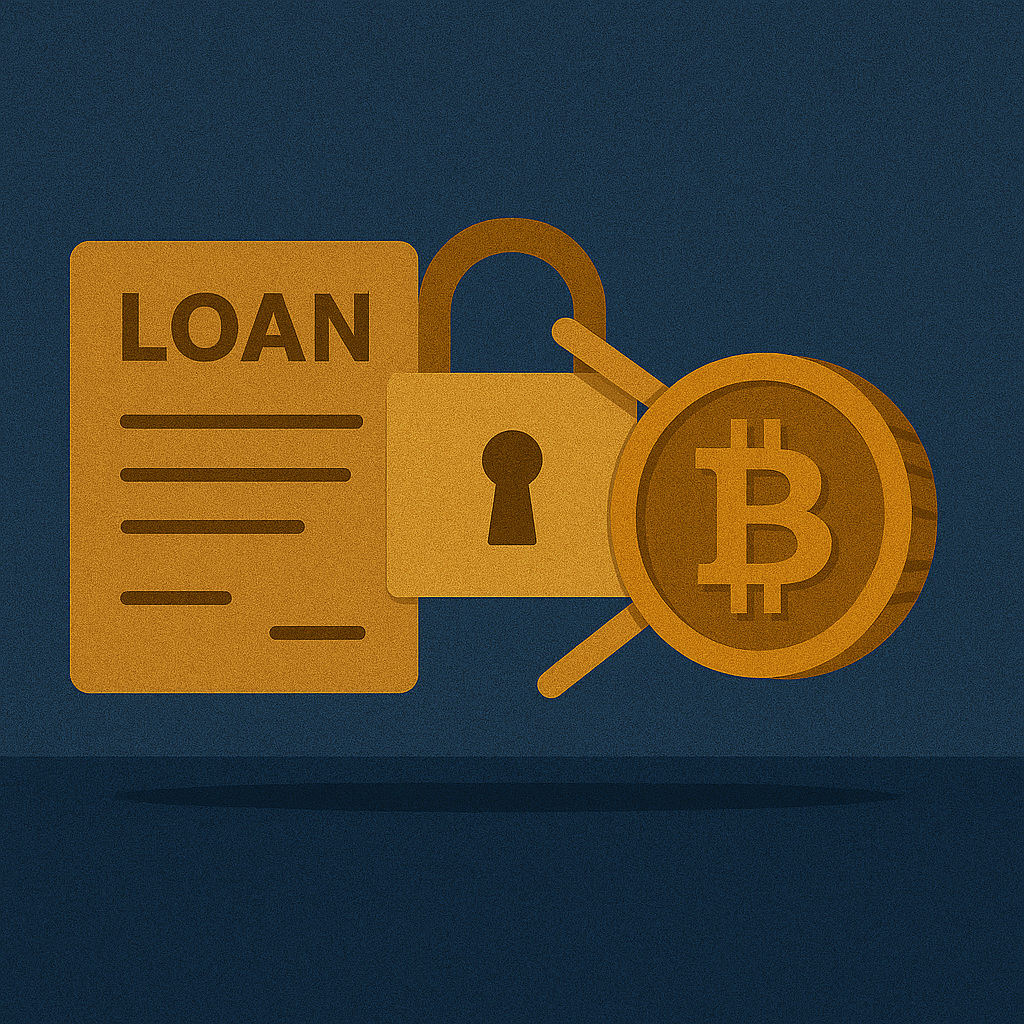
How to Use Bitcoin-Backed Loans Safely
Estimated reading time: 15 minutes
TL;DR – Bitcoin-backed loans can unlock liquidity without selling your BTC, helping you avoid taxes and keep upside exposure. But they carry serious risks—liquidation, custodial failure, and legal traps. The golden rules: keep LTV low, demand transparent custody, and plan your repayment before signing.
1. Why Borrow Against Bitcoin?
Selling Bitcoin means giving up future appreciation and often triggering a tax bill. Bitcoin-backed loans allow you to tap value without losing your position.
Why people borrow against BTC:
- Pay a tax bill without liquidation
- Fund real-world expenses like home improvements
- Provide business capital without selling equity
- Execute short-term leverage while holding BTC for the long term
Bottom line: Loans can solve liquidity needs, but a sharp BTC price drop or lender mismanagement can still wipe you out.
2. How It Works
The mechanics are straightforward:
- You pledge BTC as collateral
- The lender advances fiat or stablecoins based on a Loan-to-Value ratio (LTV)
- If BTC falls enough to breach the threshold, liquidation occurs
Example: At 25% LTV on $100,000 BTC, borrowing $25,000 keeps you relatively safe. A 50% LTV loan? One major dip and your coins are gone.
3. Risks You Can’t Ignore
Liquidation risk – BTC volatility is brutal. Overnight drops can trigger forced sales.
Custody risk – Who controls your BTC? Multi-sig with independent parties is safer than single-sig with the lender.
Counterparty risk – Lenders can fail (remember Celsius and BlockFi).
Jurisdiction risk – Legal disputes in offshore courts are a nightmare.
Rule of thumb: If you can’t explain who holds your keys in one sentence, you don’t fully control your risk.
4. The Golden Rules for Borrowing Safely
✔ Keep LTV conservative – 20–30% is the sweet spot.
✔ Pick transparent lenders – Look for public audits, proof of reserves, and clear governance.
✔ Verify custody model – Multi-sig and segregated wallets beat internal pooled accounts.
✔ Diversify exposure – Never lock your entire stack in one platform.
✔ Plan an exit – Know how you’ll repay or add collateral before you start.
5. Who Are the Leading Lenders in 2025?
Here’s what matters most: custody, minimums, and trustworthiness.
- Unchained – Best for security-conscious borrowers. Multi-sig model where you hold one key, and no rehypothecation. Ideal for high-value, long-term strategies.
- Ledn – Great for smaller borrowers. Minimums around $500, custody handled by BitGo with proof-of-reserves audits. Offers fiat and stablecoin loans with insurance backing.
- APX Lending – Enterprise-grade solution designed for institutions and high-net-worth users. Fixed rates, strong compliance posture, and institutional custody.
- Figure Markets – U.S.-regulated with qualified custodians. Streamlined process for borrowers who want clarity on jurisdiction and a compliance-first approach.
- Latern – Emerging platform focused on competitive rates and cold-storage custody for global clients.
- SALT Lending – One of the oldest names in BTC lending. Flexible terms, but review disclosures closely given past market turbulence.
- Strike – Lightning-integrated liquidity for fast BTC-to-cash loans. Best for users who value instant access and simplicity over long-term structuring.
Each lender differs on custody models, insurance, and compliance frameworks, so diligence isn’t optional.
6. Frequently Asked Questions
Q: Are these loans only for whales?
No. Ledn and Strike support loans starting as low as $500.
Q: What’s the biggest risk?
Liquidation during a BTC crash. Conservative LTV is your only real buffer.
Q: What about rehypothecation?
Stick to platforms like Unchained that explicitly avoid it—or confirm the terms before signing.
7. Key Takeaways
- BTC-backed loans can protect long-term holdings while unlocking liquidity—but they’re not free money.
- Low LTV + custody transparency = survival.
- Don’t just shop for APR. Understand the custody structure, insurance, and jurisdiction.
Used wisely, Bitcoin-backed loans are a financial lever, not a liability. Ignore these rules, and volatility will do what volatility does: wreck you fast.
Written by the 21Rates Editorial Team, July 27, 2025.