
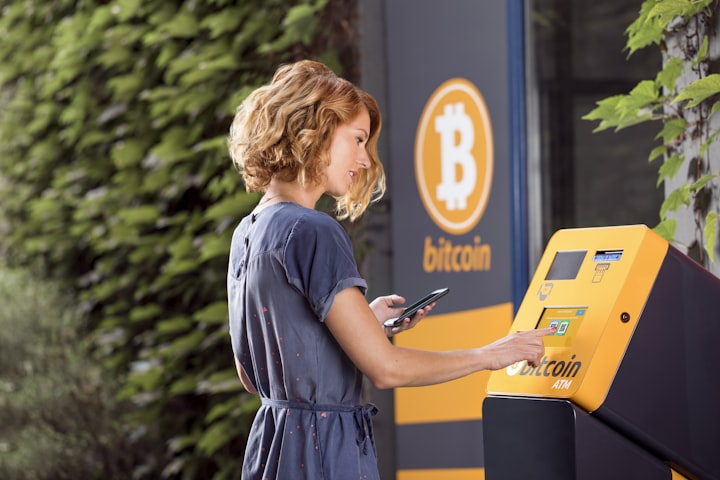
Bitcoin Depot, the largest Bitcoin ATM operator in North America, filed for Chapter 11 bankruptcy on May 18, 2026, and shut down its entire network of more than 9,000 kiosks. The company's stock fell from around $3 to $0.75 on the news. Today - June 22 - is the court-ordered bid deadline for the Section 363 asset sale, which will determine whether any of those machines ever come back online under new ownership.
The bankruptcy didn't happen overnight. Bitcoin Depot had been bleeding for months. First-quarter 2026 revenue fell 49.2% year-over-year, an $80.7 million decline. Hackers breached the company's IT systems and stole $3.7 million from its crypto wallets. The attorneys general of Massachusetts and Iowa filed lawsuits alleging the company facilitated crypto scams. Connecticut suspended its money transmission license. The company overhauled its executive team in March, bringing in a new CEO, but by May the math didn't work anymore.
What makes the Bitcoin Depot story significant isn't just one company failing. It's the regulatory wave that made the entire Bitcoin ATM business model unsustainable for operators who couldn't control fraud. Indiana banned Bitcoin ATMs statewide in March 2026 - the first state to do so. Tennessee followed in April, effective July 1. Minnesota banned them in May. Delaware and New Jersey have similar bans moving through their legislatures. In total, 30 states have passed some form of crypto kiosk legislation since 2023, with 13 of those laws enacted in 2026 alone.
What happened to Bitcoin Depot
Bitcoin Depot went public on Nasdaq in 2023 through a SPAC merger, trading under the ticker BTM. At its peak, the company operated nearly 10,000 kiosks across gas stations, convenience stores, and retail locations in all 50 states and parts of Canada. It was the dominant player in a niche industry - physical machines where people could buy Bitcoin with cash.
The collapse came in stages. Connecticut suspended Bitcoin Depot's money transmission license in early 2026 after identifying compliance failures. The company replaced its leadership team in March, but the new CEO inherited a business under siege from multiple directions.
The lawsuits from Massachusetts and Iowa attorneys general alleged that Bitcoin Depot's machines were disproportionately used for scam transactions - particularly elder fraud, where victims are instructed to deposit cash into Bitcoin ATMs by people impersonating government officials or tech support agents. The company's own hack, which cost $3.7 million in stolen crypto, raised questions about whether it could even protect its own assets, let alone its customers'.
By the time Bitcoin Depot filed for Chapter 11 on May 18 in the Southern District of Texas, the company reported $27 million in outstanding debt and a revenue run rate that had been cut roughly in half. All employees received WARN Act layoff notices, with executive terminations expected by July 17.
The fraud problem driving regulation
Bitcoin ATMs have a fraud problem that goes beyond any single operator. According to the FBI, there were more than 13,400 complaints related to crypto ATM fraud in 2025, with total losses exceeding $388 million - up 58% from the previous year. More than half of the victims were over 50.
The typical scam works like this: someone posing as a bank employee, police officer, or government agent contacts the victim, usually by phone, and tells them their accounts have been compromised or they owe money. The scammer directs the victim to a Bitcoin ATM and walks them through depositing cash, which is immediately converted to Bitcoin and sent to a wallet the scammer controls. Once the Bitcoin leaves the machine, it's essentially gone.
What made Bitcoin ATMs particularly vulnerable to fraud isn't the technology - it's the demographics. These machines are most commonly located in low-income neighborhoods, gas stations, and convenience stores. The users skew older and less tech-savvy than the typical crypto exchange customer. And unlike a bank wire, which can sometimes be reversed, a Bitcoin transaction is final.
The Crypto ATM Fraud Prevention Act (S.710), introduced in the 119th Congress, would impose federal standards including daily transaction limits, mandatory fraud warning signage, and a 72-hour hold on first-time transactions over $500. Whether it passes or not, the state-level momentum has already reshaped the industry.
Which states have banned Bitcoin ATMs
The regulatory map is moving fast. Three states have enacted outright bans, and two more have legislation in progress.
Beyond outright bans, most of the 30 states with crypto kiosk legislation have focused on operational restrictions: daily transaction limits (often $500-$2,000), mandatory fraud warning signage, operator licensing requirements, and mandatory transaction receipts for law enforcement tracing.
Why the business model broke
Bitcoin ATMs were always an expensive way to buy Bitcoin. Most operators charged fees between 10% and 20% per transaction - sometimes higher - compared to under 1% on exchanges like Coinbase or Kraken. The value proposition was convenience and cash access: you could walk into a gas station with a $20 bill and walk out with Bitcoin on your phone.
That worked when the target customer was someone who didn't have a bank account or didn't trust online exchanges. But the same convenience that made ATMs accessible also made them a perfect tool for scammers. Once regulators connected those dots, the business model started collapsing.
The economics are tough even without regulation. Bitcoin ATM operators need to maintain physical machines in thousands of locations, each with a site lease, maintenance costs, cash logistics, and compliance overhead. When revenues drop and compliance costs rise simultaneously, margins evaporate. Bitcoin Depot's 49% revenue decline in Q1 2026 suggests that even before the bankruptcy, transaction volumes were falling off a cliff as regulation tightened.
The industry also lost its regulatory cover. The OCC and state banking regulators have become much more aggressive about money transmission licensing since 2024, partly driven by the broader crypto banking push and partly by the fraud statistics. Bitcoin Depot losing its Connecticut license was a canary in the coal mine.
What happens to Bitcoin ATMs now
Bitcoin ATMs aren't going to disappear entirely, but the industry is going through a forced consolidation and cleanup. Smaller, compliant operators may survive in states that chose to regulate rather than ban. Bitcoin of America, CoinFlip, and a handful of other operators are still active, though all are dealing with increased compliance costs and shrinking margins.
The larger question is whether Bitcoin ATMs serve a real purpose in 2026. When you can buy Bitcoin on Cash App, Venmo, PayPal, or any number of mobile apps with lower fees and better consumer protections, the use case for a physical kiosk narrows considerably. The people who genuinely need cash-to-crypto conversion - unbanked or underbanked populations - may have fewer options, not more, as the ATM network contracts.
For the broader Bitcoin market, Bitcoin Depot's bankruptcy barely registers. The 9,000 machines that went offline handled a tiny fraction of total Bitcoin transaction volume. Institutional buyers use ETFs like IBIT. Retail traders use exchanges. The ATM collapse is a consumer protection story, not a Bitcoin market story.
Frequently asked questions
Why did Bitcoin Depot go bankrupt?
Bitcoin Depot filed for Chapter 11 on May 18, 2026, after its revenue dropped 49% year-over-year in Q1 2026, it lost its Connecticut money transmission license, faced lawsuits from Massachusetts and Iowa over fraud facilitation, and suffered a $3.7 million hack. The combination of falling revenue and rising regulatory pressure made the business model unsustainable.
Are Bitcoin ATMs banned in the United States?
Bitcoin ATMs are banned in three states as of June 2026: Indiana (effective March 2026), Tennessee (effective July 1, 2026), and Minnesota (effective May 2026). Delaware and New Jersey have ban legislation pending. The remaining states allow them with varying levels of regulation, including transaction limits and operator licensing requirements.
How many Bitcoin ATMs are still operating in the US?
The exact number is declining. Bitcoin Depot's shutdown removed over 9,000 machines from the network. Other operators like Bitcoin of America and CoinFlip are still active, but the total number of crypto ATMs in the US has been falling throughout 2026 as operators close locations in response to tighter regulation and declining transaction volumes.
Why are Bitcoin ATMs being banned?
States are banning Bitcoin ATMs primarily because of fraud. The FBI reported 13,400+ crypto ATM fraud complaints in 2025 with $388 million in losses, up 58% year-over-year. Scammers use the machines to trick victims - particularly older adults - into depositing cash that's immediately converted to Bitcoin and sent to untraceable wallets.
Are Bitcoin ATMs safe to use?
Bitcoin ATMs operated by licensed, regulated companies in states with consumer protection laws are legal to use, but they carry significantly higher fees (10-20%) than online exchanges (under 1%). The fraud risk comes primarily from scammers who direct victims to ATMs, not from the machines themselves. If someone you don't know tells you to deposit money at a Bitcoin ATM, it's almost certainly a scam.
What happened to Bitcoin Depot stock (BTM)?
Bitcoin Depot stock dropped from approximately $3 to $0.75 per share after the May 18, 2026 bankruptcy filing. The company traded on Nasdaq under the ticker BTM after going public through a SPAC merger in 2023. The stock is expected to be delisted as part of the Chapter 11 wind-down process.
Will Bitcoin ATMs come back?
Some will survive under compliant operators in regulated states, but the industry will be much smaller. The Crypto ATM Fraud Prevention Act in Congress would impose federal standards including daily limits and fraud warning requirements. Operators that remain will need to invest heavily in KYC compliance, which means fewer locations and higher costs.
What's the cheapest way to buy Bitcoin without a Bitcoin ATM?
Online exchanges like Coinbase, Kraken, and Gemini charge under 1% in fees compared to the 10-20% charged by most Bitcoin ATMs. Mobile apps including Cash App, Venmo, and PayPal also support Bitcoin purchases at lower fees. All of these options require identity verification but offer better consumer protections than ATM kiosks.
How much did Bitcoin ATM fraud cost in 2025?
The FBI's Internet Crime Complaint Center recorded over $388 million in crypto ATM fraud losses across 13,400+ complaints in 2025, representing a 58% increase from the previous year. More than half of victims were over the age of 50, and the most common scam types involved impersonation of government officials, bank employees, and tech support staff.
Does Bitcoin Depot's bankruptcy affect Bitcoin's price?
No. Bitcoin Depot's 9,000 ATMs handled a negligible fraction of total Bitcoin transaction volume. The bankruptcy is a consumer protection and regulatory story, not a market-moving event. Bitcoin's price is driven by ETF flows, institutional adoption, and macroeconomic factors like Federal Reserve policy, not by the ATM distribution channel.
Sean Ristau | @SeanRistau | 21Rates / The Daily Stack


