
- Bitcoin
- Bitcoin Mining
- AI Data Centers
- MARA
- Riot Platforms
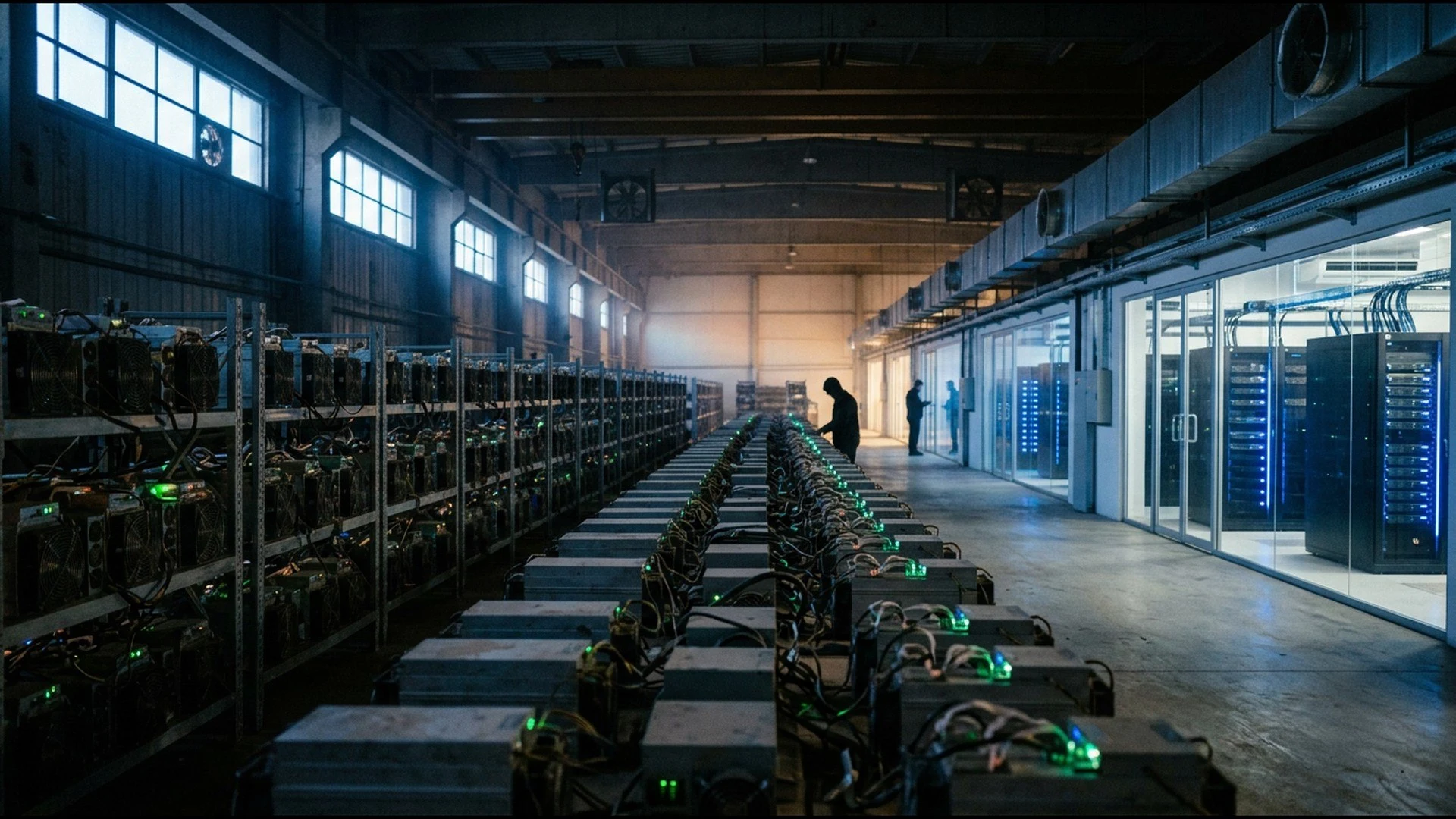
Short answer: Public Bitcoin miners are selling far more BTC than they mine and putting the cash into AI data centers and debt paydown. My take is that this isn't panic but a business-model change, and one that quietly removes one of Bitcoin's most loyal groups of holders.
What are Bitcoin miners actually doing?
They're selling a lot more than they mine. Lookonchain's tally, as reported by Analytics Insight, says 14 public companies sold or moved 108,247 BTC in 2026, about $8.08 billion, with MARA and Riot accounting for 60,845 BTC of it. That figure includes estimated wallet outflows and options or basis deliveries, so it overstates pure cash sales. The company filings tell the story on their own:
- Riot sold 20,264 BTC in the first nine months while mining only 4,697, and says it plans to keep selling substantially all newly mined coins to fund data center construction.
- Core Scientific sold 3,374 BTC against 869 mined, and its reserve fell to 32 BTC.
- MARA sold 26,984 BTC for $1.9 billion through September, then another 13,597 BTC for about $1.1 billion, and used $750 million to repay Bitcoin-backed loans.
For context, this came the same weekend Bitcoin touched a two-year low on Saturday, Nov. 21, per Reuters.
Why are miners pivoting to AI data centers?
Because the mining business got worse and the AI business looks better. Hashprice, what a miner earns per unit of computing power, fell to $26.16 per petahash per second per day on Saturday. Transaction fees were just 0.64% of block rewards over the prior 24 hours, so nearly all miner revenue comes from the block subsidy, which keeps shrinking with each halving.
Competition isn't easing either. Hashrate recovered above 1 zettahash after a dip to about 912 exahashes on Nov. 14, and difficulty is projected to rise nearly 9% around Nov. 27, which means more machines are chasing the same shrinking reward.
Now look at what miners already own: cheap power contracts, grid connections, land and cooling. That's exactly what AI companies are scrambling for. A megawatt that earns thin margins hashing can be leased to an AI tenant on a multiyear contract. If you run a public miner and answer to shareholders, the math pushes you pretty hard in one direction.
So these companies aren't dumping Bitcoin because they're scared of it. They're selling because, given the choice, they'd rather own GPUs than coins.
Who wins and who loses from this shift?
Winners: miners with strong power sites and the balance sheet to finish the buildout. They swap a volatile revenue stream for contracted, data center style income, and I'd expect investors to reward that.
Losers: smaller miners without the capital or the power deals to pivot. They're stuck with a harder network and lower hashprice, and they're the likeliest to merge, sell sites, or shut down.
The network: this is the part I'd watch most closely. For years, public miners were a "hodl" story, holding what they mined and treating Bitcoin as their treasury, and that identity is fading fast. Fewer committed holders inside the industry means Bitcoin leans more on outside buyers like ETFs and treasury companies.
Does this hurt Bitcoin long term?
I don't think it has to. Hashrate moving to the most efficient operators is how the system is built to work, and difficulty adjusts if machines go offline. Security doesn't depend on any one company staying loyal.
What it does change is who the industry's natural sellers are. A miner that funds GPUs by selling BTC is now a steady, predictable seller with a business reason, not an emotional one.
My take: what would change my mind
I think the miner-to-AI pivot is permanent for the biggest players, and the "miners as long-term holders" era is ending. I'd rethink that if:
- Fee revenue climbs meaningfully as a share of block rewards, giving miners a reason to stay pure-play.
- AI hosting deals stall or get repriced, making the pivot less attractive than it looks today.
- A major miner starts rebuilding its BTC reserve in its quarterly filings instead of drawing it down.
Until one of those happens, I think the most interesting Bitcoin business story of the year isn't on a price chart at all. It's buried in the power contracts.
The miners didn't lose faith in Bitcoin. They found a better customer for their electricity.
Not financial advice. This is our opinion on the news shaping Bitcoin.
FAQ
Why are Bitcoin miners selling BTC in 2026?
Many are funding AI data center buildouts and repaying debt. Riot, Core Scientific and MARA all reported selling more BTC than they mined or holding sharply lower reserves.
What is hashprice?
It's a miner's revenue per unit of computing power per day. It fell to $26.16 per petahash per second per day on Nov. 21, 2026.
Is miner selling bad for Bitcoin's security?
Not directly. Difficulty adjusts as machines come and go, but the shift does remove a group of long-term holders from the industry.
Sources: Reuters (via Dawn), CryptoSlate, Analytics Insight (Lookonchain, CNBC)
More Articles About Bitcoin
Bitcoin Under $56,000: This Isn't a Crypto Crash. It's a Forced-Seller Problem.
Bitcoin fell below $56,000 as miners, retail ETF holders and leveraged longs sold at the same time. The immediate headlines are the spark, but forced ...
November 21, 2026
Interest Only Bitcoin Loan: Plan for the Principal Due
An interest only bitcoin loan separates ongoing interest payments from principal repayment. In the dated 21Rates STRIKE illustration, the monthly paym...
November 21, 2026
Bitcoin Custody Minimum Balance: A Practical Shortlist
The dated 21Rates directory lists some custody minimums as None, while explicit thresholds start at $50,000. These are directory listings as of Nov 5,...
November 20, 2026
Podcast Conversations About Bitcoin

Buying Bitcoin Isn’t Enough | The Bitcoin Advice Nobody Talks About
Buying Bitcoin may be the beginning — but it shouldn't be the end. This conversation challenges the ...

Bitcoin's Biggest Obstacle Isn't What You Think | Ophelia Snyder
In this episode of The Daily Stack, we sit down with Ophelia Snyder, co-founder of 21Shares, the com...

Bitcoin Is Changing — Self-Custody, Saylor & the New Bitcoin Era
Bitcoin is changing — and the biggest debate may not be about price. In this episode, we dive into t...