
- Bitcoin
- Bitcoin ETFs
The short answer
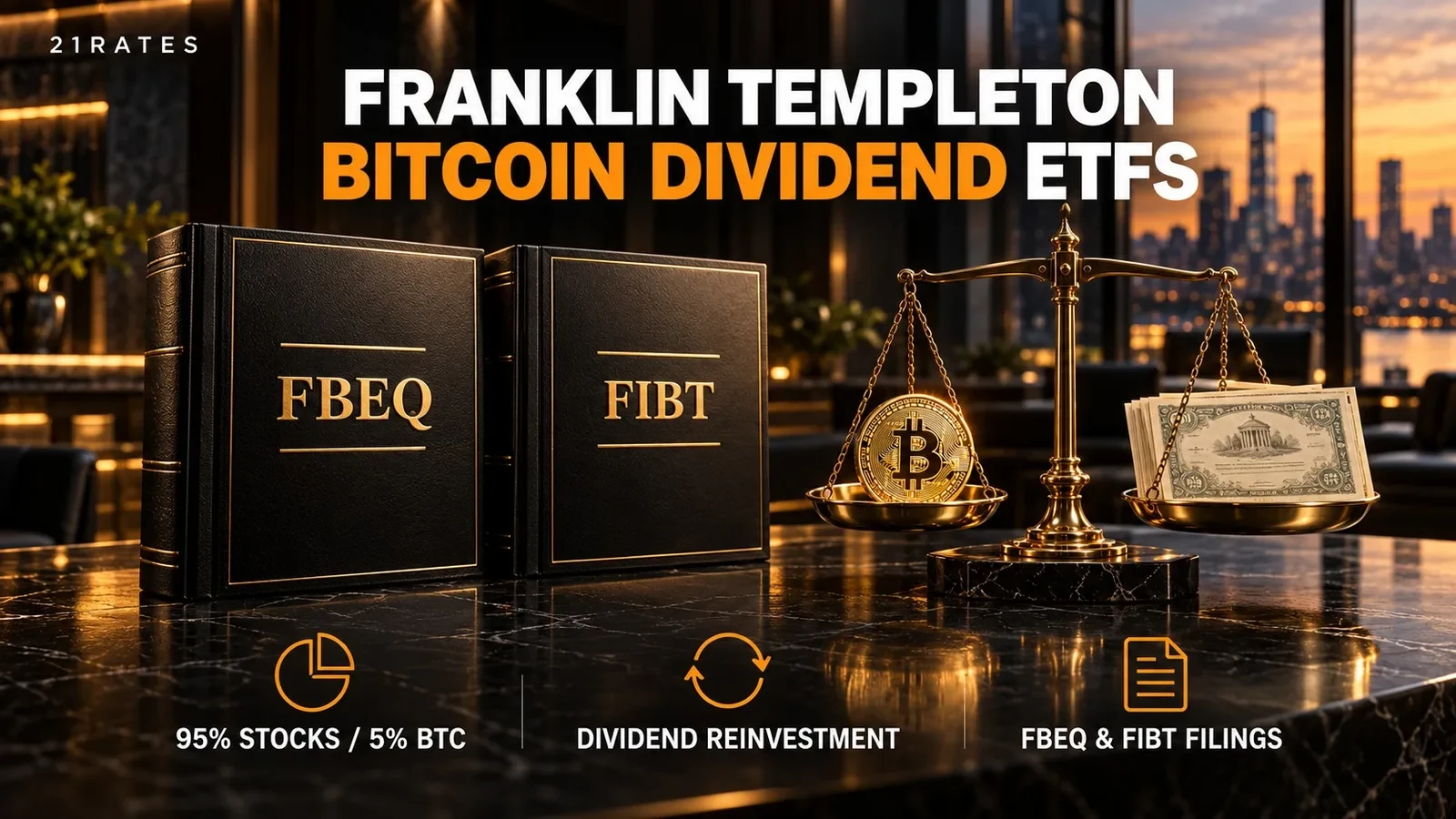
The Franklin Templeton bitcoin dividend ETF people are searching for is actually two filed funds: the Franklin US Equity Bitcoin DRIP Index ETF (FBEQ) and the Franklin US Innovation Bitcoin DRIP Index ETF (FIBT). Both are stock-first funds that reinvest their dividends into bitcoin. They are registered, not trading. If you want bitcoin exposure itself, a spot bitcoin ETF is the cleaner tool. If you want a U.S. equity fund that slowly converts dividend income into bitcoin, this structure is built for that, once it lists.
What Franklin Templeton filed
The prospectus, dated October 27, 2026, names FBEQ and FIBT and describes the same core design for both (SEC prospectus):
- At inception, the underlying index reflected a 5% allocation to bitcoin and a 95% allocation to component securities.
- All regular and special dividends from the stocks are reinvested into bitcoin at the market open on the day following the dividend ex-date.
- The index applies a 5% cap at each quarterly rebalance and an overall bitcoin exposure cap of 20%.
- Bitcoin-related investments may include exchange-traded products, bitcoin-backed ETPs sponsored by affiliates, futures, options and a Cayman subsidiary.
The stated annual fees are 0.09% for FBEQ and 0.19% for FIBT. The prospectus one-year cost example for a $10,000 investment in FBEQ is $9. Note that the filing allows the funds to hold affiliated bitcoin ETPs, so the stated operating fee is not necessarily the all-in cost of the bitcoin sleeve.
Filed and registered is not the same as trading
The Franklin Templeton ETF Trust filing index lists Form 8-A12B and Form 485BPOS filings dated October 22, 2026 (SEC filings index). An 8-A is an exchange-registration step, not proof that the funds are trading (TradingView/NewsBTC). Reporting on the registration states that no trading date had been announced (Yahoo Finance). The filing proposes an October 27 effective date, but you cannot buy FBEQ or FIBT yet.
What the dividend mechanism actually does
These are not dividend-paying bitcoin ETFs. The income flows the other way: the stocks pay dividends, and the fund uses that cash to buy bitcoin. So a shareholder's bitcoin exposure grows through reinvested dividends, subject to the quarterly 5% rebalance cap and the 20% overall exposure cap described in the filing. The filing describes cap and reset rules, so exposure is managed around those limits rather than fixed forever at 5%.
You also do not receive coins. A shareholder owns ETF shares rather than receiving bitcoin in a personal wallet. That means brokerage-account convenience, no key management, and no ability to withdraw bitcoin on-chain.
How FBEQ and FIBT compare with spot bitcoin ETFs
The decision factor is what you want exposure to. FBEQ and FIBT are equity funds with a small, dividend-fed bitcoin sleeve. Spot ETFs are bitcoin exposure, full stop.
| Fund | Structure | Fee | Bitcoin exposure |
|---|---|---|---|
| FBEQ | 95% U.S. stocks, 5% bitcoin, dividends reinvested into bitcoin | 0.09% | Small, capped, grows via dividends |
| FIBT | Same design, innovation-focused stock index | 0.19% | Small, capped, grows via dividends |
| EZBC | Spot bitcoin ETF tracking the CME CF Bitcoin Reference Rate, New York Variant, less expenses and liabilities | 0.19% | Direct |
| IBIT | Directly invests in physical bitcoin | 0.25% | Direct |
| BTC | Grayscale Bitcoin Mini Trust ETF, a spot fund | 0.15% | Direct |
Sources: FBEQ/FIBT prospectus, EZBC review, IBIT review, BTC review. EZBC uses Coinbase Custody for safekeeping; IBIT uses Coinbase Prime. 21Rates tracks these spot ETF structures and expense ratios on its bitcoin ETF comparison page.
Two trade-offs to weigh. First, cost: FBEQ's 0.09% headline fee is lower than any spot ETF listed here, but you are paying for a stock fund with a bitcoin kicker, not for bitcoin exposure per dollar. Second, control: none of these products gives you keys. If self-custody matters to you, that is a separate decision from ticker selection.
Who each option fits
- FBEQ or FIBT, once listed: an investor who wants a U.S. equity index fund and likes the idea of dividends compounding into a capped bitcoin position inside a brokerage account.
- EZBC, IBIT or BTC: an investor whose goal is bitcoin price exposure in a regulated wrapper, and who is comparing on fee, custodian and issuer.
- Neither replaces holding bitcoin directly if on-chain ownership is the point.
What to do next
Confirm whether the funds have begun trading before placing any order, since registration alone does not make them available. Read the prospectus fee and risk sections for the affiliated-ETP layering, and compare the spot alternatives on fee and custody if direct exposure is what you actually want.
Frequently asked questions
Can I buy the Franklin Templeton bitcoin dividend ETF now?
No. FBEQ and FIBT are registered with the SEC, but registration is not a listing. Reporting on the filing states that no trading date had been announced, so check whether the funds are actually trading before placing an order.
Does FBEQ pay dividends in bitcoin?
No. The income flows the other way. The U.S. stocks in the fund pay dividends, and the fund reinvests those dividends into bitcoin at the market open on the day following the ex-date. You hold ETF shares, not coins.
How much bitcoin do FBEQ and FIBT hold?
At inception the underlying index reflected 5% bitcoin and 95% component securities. The index applies a 5% cap at each quarterly rebalance and an overall bitcoin exposure cap of 20%, with reset rules described in the filing.
How do these differ from a spot bitcoin ETF like IBIT or EZBC?
Spot ETFs hold bitcoin directly and give you bitcoin price exposure as the whole product. FBEQ and FIBT are stock index funds with a small, dividend-fed bitcoin sleeve. Pick based on whether you want equities with a bitcoin kicker or bitcoin exposure itself.
Is the 0.09% FBEQ fee the full cost?
Not necessarily. The filing permits the funds to hold bitcoin-backed ETPs sponsored by affiliates, and those products carry their own costs. The stated operating fee should not be read as the all-in cost of the bitcoin sleeve.
Read next
More Articles About Bitcoin
Minimum Loan Size for Major Bitcoin Lenders: 21Rates Data
Among the 21 Bitcoin lenders tracked by 21Rates (data as of Oct 23, 2026), minimum loan sizes run from $0 at Coinbase on the custodial side up to $500...
October 26, 2026
Will the Fed Raise Rates in October? What It Means for Bitcoin Loans
The FOMC meets October 27-28, 2026, and as of October 23 a hold at 3.75% to 4.00% was widely expected, per CNBC. Whatever the decision, it does not mo...
October 25, 2026
Does Tesla Still Own Bitcoin? Holdings as of September 30, 2026
Yes, Tesla still owns bitcoin. As of September 30, 2026, Tesla held 11,509 BTC at an acquisition cost of $386 million, and SpaceX held 18,712 BTC with...
October 24, 2026
Podcast Conversations About Bitcoin

Buying Bitcoin Isn’t Enough | The Bitcoin Advice Nobody Talks About
Buying Bitcoin may be the beginning — but it shouldn't be the end. This conversation challenges the ...

Bitcoin's Biggest Obstacle Isn't What You Think | Ophelia Snyder
In this episode of The Daily Stack, we sit down with Ophelia Snyder, co-founder of 21Shares, the com...

Bitcoin Is Changing — Self-Custody, Saylor & the New Bitcoin Era
Bitcoin is changing — and the biggest debate may not be about price. In this episode, we dive into t...